



 Plastic Sheet


 Food Containers


 Sealing Film


 Food Packing Machinery
  One-Stop Solutions

How CPET Food Containers Stack Up Against PET and PP Packaging
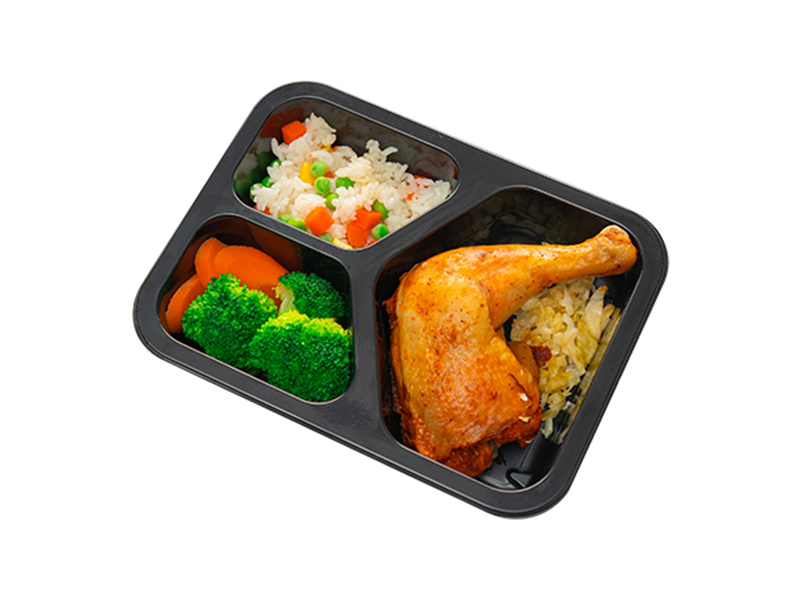
CPET food containers offer unmatched performance for demanding food packaging needs. These containers withstand extreme temperatures, from freezer to oven, making them ideal for ready meals and airline catering. Market share projections show CPET climbing to 40% globally by 2025, challenging PP and PET, which hold 42% and 24% respectively.
Material Type | Market Share |
|---|---|
PP | 42% |
PET | 24% |
CPET | 40% (2025) |
HSQY’s CPET trays demonstrate innovation with dual-ovenable, recyclable designs. Industry professionals and consumers select CPET food containers for their durability, food safety, and versatility. Considerations include temperature requirements, shelf display, and recycling needs. CPET stands out when oven compatibility and long shelf life matter most.
PET suits fresh foods needing clear display.
PP fits hot takeaway meals.
CPET food containers excel in freezer-to-oven applications.
Key Takeaways
CPET containers excel in extreme temperatures, making them perfect for freezer-to-oven applications.
Choosing the right packaging material depends on food type: CPET for ready meals, PET for cold foods, and PP for hot meals.
CPET trays extend shelf life by 3-5 days, enhancing food quality and reducing waste.
All three materials—CPET, PET, and PP—are recyclable, supporting sustainability goals.
Switching to CPET can boost customer satisfaction and sales, with companies reporting significant improvements.
CPET Food Containers vs PET and PP
Quick Comparison Overview
Choosing the right food packaging material depends on several performance metrics. The table below summarizes how CPET, PET, and PP stack up in key areas:
Metric | CPET Trays | PET Containers | PP Containers |
|---|---|---|---|
Heat Resistance | -40°C to 220°C | Up to 80°C | Up to 120°C |
Durability | High; resists cracking and warping | Moderate; rigid but softens with heat | High; tough and impact-resistant |
Recyclability | Yes; energy-efficient recycling | Yes; widely recycled | Yes; cost-effective recycling |
Food Safety | Chemically inert; oven-safe | Safe for cold foods | Microwave-safe; safe for hot foods |
Shelf Life | Extends shelf life by 3-5 days | Excellent for cold storage | Blocks moisture; good for hot foods |
Tip: CPET trays are lighter than aluminum, which helps reduce transportation emissions. A company shipping 500,000 containers each year can cut logistics-related CO₂ emissions by up to 18 metric tons by switching to CPET.
Key Differences in Food Packaging
CPET stands out for its ability to move from freezer to oven without losing shape or releasing harmful substances. This makes it ideal for ready meal packaging, airline catering, and frozen food applications. PET is best for foods that need clear display and cold storage, such as sushi, salads, and fruit. PP works well for hot takeaway meals and microwave-safe trays.
Heat Resistance
CPET tolerates extreme temperatures, from -40°C to 220°C.
PET starts to soften at 80°C and is not suitable for hot foods.
PP handles up to 120°C, making it safe for microwaves and hot meals.
Durability
CPET resists cracking and warping during freezing and heating.
PET offers rigidity for cold foods but loses strength with heat.
PP is tough and impact-resistant, ideal for meal-prep containers.
Recyclability
All three materials are recyclable. CPET uses less energy during recycling, which lowers environmental impact.
Food Safety
CPET is chemically inert and oven-safe, ensuring no reaction with food.
PET is safe for cold foods but not recommended for high heat.
PP is microwave-safe and suitable for hot foods.
Shelf Life
CPET extends shelf life by 3-5 days for baked goods.
PET preserves freshness for cold foods.
PP blocks moisture, keeping hot foods fresh.
Material | Key Applications | Strengths |
|---|---|---|
CPET | Ready meals, airline catering, bakery trays, frozen entrees | Dual-ovenable, extends shelf life, customizable |
PET | Sushi containers, salad bowls, fruit clamshells, cake domes, sandwich wedges | Superior visibility, rigidity, recyclability |
PP | Meal-prep containers, microwave-safe trays, hot-takeaway boxes, deli containers | Heat resistance, impact toughness, durability |
Customer satisfaction rises when using CPET trays. Companies report a 30% increase in satisfaction and a 25% boost in sales after switching to CPET. Complaints about freezer burn and food quality drop, leading to stronger brand loyalty.
CPET, PET, and PP each serve unique roles in the food packaging material market. CPET is the best choice for freezer-to-oven meals and baked goods. PET is preferred for foods that need clear display and cold storage. PP is ideal for hot meals and microwave applications.
CPET Food Packaging Material
CPET Advantages
CPET food containers offer a unique combination of features that make them stand out in the packaging industry. The crystalline structure of CPET allows it to withstand temperatures from -40°C up to 220°C. This wide temperature range means CPET trays can move directly from the freezer to the oven without losing their shape or integrity. The dual-ovenable feature lets users heat food in both microwave and conventional ovens, which is essential for ready meals and airline catering. Unlike standard PET, CPET maintains its form during extended cooking, preventing leaks or collapse.
CPET trays provide high-barrier performance, protecting food from external contaminants. Their moisture and gas-barrier properties help extend shelf life and preserve freshness. These features are especially important for products that require long storage or transport. CPET also supports sustainability goals. It is recyclable and uses less energy during recycling compared to some alternatives. Many companies choose CPET to reduce their environmental impact and support a circular economy.
Note: Regulatory agencies confirm that CPET is specifically designed for both microwave and oven use, making it a safe choice for a variety of food applications.
Overcoming Industry Challenges with HSQY’s Manufacturing Excellence
While CPET is a superior material, poor manufacturing practices by unreliable suppliers can lead to issues like warping in the oven or chemical migration. HSQY eliminates these risks through strict vertical integration and advanced crystallization control during the sheet extrusion process.
Industry Challenge | The HSQY Solution |
|---|---|
Inconsistent Crystallization (Warping) | Because we extrude our own CPET sheets, we precisely control crystallization, guaranteeing dimensional stability from freezer to oven. |
Chemical Contaminants | We use 100% virgin, food-grade PET resin compliant with FDA 21 CFR and EU 10/2011, ensuring zero harmful migration even at 220°C. |
Real-World Success: Zero Deformation at 200°C
To understand the impact of precise manufacturing, consider our recent work with a leading European ready-meal manufacturer. They were facing a critical issue: their existing packaging became soft and unstable when heated in conventional ovens at 200°C, leading to consumer complaints about spills and damaging their premium brand image.
The HSQY Solution: We engineered a custom High-Performance CPET Tray featuring structural reinforced ribs and a specialized CPET formula capable of withstanding extreme thermal shock.
The Results:
Zero Deformation: The trays remained completely rigid and safe to handle straight out of a 200°C oven.
Premium Aesthetics: A robust, glossy black finish elevated the product's shelf appeal.
Business Impact: Consumer complaints regarding spills dropped to zero, enabling the client to successfully launch a new, highly profitable "Oven-Bake" premium line.
Read the Full Story: Discover exactly how we engineered this solution in our detailed case study: How a Premium Ready-Meal Brand Achieved 0% Deformation with HSQY CPET.
HSQY CPET Trays Features & One-Stop Solutions
HSQY’s CPET trays set a high standard in the market. Each tray is certified by FSSC, BRC, and FDA. We offer a wide range of cavity options to suit different portion sizes and meal types, including 1-cavity CPET trays for large entrees, 2-cavity designs for main courses with sides, and 3-cavity trays for diverse meal prep.
Beyond just trays, HSQY provides a complete one-stop packaging solution. Our robust supply chain includes matching high-barrier sealing films and thermoforming machines, ensuring 100% material compatibility and reducing your sourcing costs.
PET Food Packaging
PET Strengths
PET food packaging offers several advantages for food manufacturers and retailers. Laboratory testing confirms that PET offers excellent tensile, impact, and tear resistance. It recovers well from stress, maintains its shape, and features strong seals to prevent leaks, making it the undisputed king of clear, cold-food display.
PET packaging stands out for its clarity. Shoppers can see the food inside, which increases shelf appeal and helps brands build trust.
PET Weaknesses
PET food packaging has some limitations. It does not tolerate high temperatures well. Containers may soften or deform when exposed to heat above 80°C. This restricts its use for hot foods or microwave applications. PET is also less flexible than some alternatives, which can lead to cracking if handled roughly. While PET is recyclable, contamination from food residues can reduce recycling efficiency.
PET Applications
PET food packaging serves many purposes in the food industry. It preserves freshness and enhances shelf appeal. PET containers are used for sushi, salads, fruit, cakes, and sandwiches. Brands rely on PET to maintain credibility and customer trust.
Sushi trays
Salad bowls
Fruit clamshells
Cake domes
Sandwich wedges
PP Food Packaging Material
PP Strengths
Polypropylene (PP) is a popular choice in the food packaging industry due to its impressive balance of properties. It offers excellent heat resistance, with a melting point between 160°C and 175°C. This makes PP suitable for packaging hot foods and for microwave use. The material also shows good chemical stability, resisting acids, bases, and salts. Its low density keeps packaging lightweight, which helps reduce shipping costs.
Tip: PP containers are often chosen for their durability and ability to handle both hot and cold foods, making them a flexible solution for many food businesses.
PP Weaknesses
PP does have some limitations compared to other materials like PET. Its oxygen barrier properties are modest, which means it may not protect oxygen-sensitive foods as well as PET. For some products, extra layers are needed to keep food fresh. PP can soften and deform at high temperatures, so it is not suitable for all heating methods like conventional ovens.
PP Applications
PP is widely used in commercial food service because of its mechanical strength and ability to handle temperature changes. It is common in takeout food boxes, clear hinged containers, and meal-prep containers. PP is also used for microwave-safe lunch containers, soup and noodle containers, and fresh food packaging trays.
PP is a top choice for restaurants, meal prep companies, catering services, supermarkets, and retail food brands. It is also used for chilled food applications, but PET remains the preferred material when high clarity and strong oxygen barriers are needed.
Head-to-Head: Food Packaging Material Comparison
Heat Resistance & Temperature Range
Food packaging must withstand a range of temperatures to protect products during storage, transport, and preparation. CPET trays excel in this area. They operate safely from freezer temperatures up to 220°C, making them suitable for both cold storage and oven heating. PET containers perform well between -40°C and 80°C, but they soften at higher temperatures. PP containers handle temperatures from -20°C to 120°C, which makes them ideal for microwave use but less suitable for conventional ovens.
Material | Operating Temp (°C) | Tg (°C) | HDT (°C) | Tm (°C) |
|---|---|---|---|---|
CPET | Up to 220 | N/A | N/A | N/A |
PET | -40 to 80 | 70-80 | 70-80 | 250-260 |
PP | -20 to 120 | -10 to -20 | 100 to 120 | 160 to 170 |
Durability & Rigidity
Durability ensures that packaging protects food throughout its journey. CPET trays have a flexural modulus between 3,200 and 3,800 MPa. This rigidity allows them to hold shape under load and heat. PET containers are more flexible, with a modulus between 2,800 and 3,100 MPa. PP containers offer toughness and impact resistance, making them reliable for meal-prep and takeout.
Material | Typical Flexural Modulus (MPa) | Practical Effect |
|---|---|---|
CPET | 3,200–3,800 | Rigid, holds shape under load and heat |
PET | 2,800–3,100 | Flexible, easily bends under pressure |
CPET trays reduce packaging failures across the supply chain, supporting multi-day shelf life and minimizing food waste.
Recyclability & Sustainability
Sustainability is a growing concern in food packaging. PET bottles achieved a recycling rate of 41.3% in North America in 2023. CPET trays are recyclable and use less energy during recycling. PP containers are widely recyclable, with accessibility in many regions.
PET packaging leads in recycling rates and global market share.
CPET trays support energy-efficient recycling and circular economy goals.
PP containers offer cost-effective recycling, but local infrastructure affects effectiveness.
Food Safety & Compliance
Food safety is critical in packaging. CPET trays meet FDA 21 CFR 177.1520 and EU Regulation 10/2011. They maintain dimensional stability after exposure to high heat and show minimal weight loss from volatile compounds.
Material | Compliance Standard | Key Findings |
|---|---|---|
CPET | FDA 21 CFR 177.1520 | Complies with total migration limits below 10 mg/dm² and heavy metals content |
CPET | EU Regulation 10/2011 | Migration levels must stay under 0.01 mg/kg for chemicals like acetaldehyde |
Choosing the Right Food Packaging
Application-Based Decision Guide
Selecting the best food packaging depends on several important factors. Each material offers unique benefits for different food types and business needs.
Material | Clarity | Moisture Barrier | Heat Tolerance | Recyclability | Typical Cost |
|---|---|---|---|---|---|
PET | Excellent | Good | Moderate | Widely Recycled | Low–Medium |
PP | Good | Good | High | Recyclable | Low |
CPET | Moderate | Excellent | Very High | Recyclable | Medium |
CPET stands out for ready meals, airline catering, and any application needing freezer-to-oven performance. PET is ideal for foods that require clear display and cold storage. PP works well for hot takeout and microwaveable meals.
Cost & Supply Chain Factors
Cost and supply chain stability play a major role in packaging decisions. Companies benefit from reliable suppliers like HSQY, who offer consistent quality, in-house sheet extrusion, and timely delivery for CPET trays.
Tip: Choosing a packaging partner with strong logistics and production capacity can help prevent delays and ensure steady supply, even during peak demand.
Choosing the right food packaging depends on your needs. CPET works best for ready meals and oven use. PET offers high clarity for snacks and cold foods, with strong recycling rates. PP is cost-effective and handles hot foods well.
FAQ
What makes CPET trays different from PET and PP containers?
CPET trays handle both freezing and oven heating. PET containers work best for cold foods and clear display. PP containers suit hot meals and microwave use. Each material serves a unique purpose in food packaging.
Are CPET trays safe for oven and microwave use?
Yes. CPET trays withstand temperatures from -40°C to 220°C. They do not release harmful substances during heating. Regulatory agencies approve CPET for both oven and microwave applications.
Can CPET, PET, and PP containers be recycled?
All three materials are recyclable. PET has the highest recycling rate. CPET supports energy-efficient recycling. PP recycling depends on local facilities. Check your area's recycling guidelines for best results.
Which packaging material extends shelf life the most?
CPET trays offer strong moisture and gas barriers. They help extend shelf life by 3–5 days for ready meals and baked goods. PET and PP also protect food, but CPET performs best for long storage.
How do I choose the right food packaging for my business?
Consider your food type, temperature needs, display requirements, and sustainability goals. Use the table below for quick reference:
Material | Best For | Heat Resistance | Clarity | Recyclability |
|---|---|---|---|---|
CPET | Ready meals, baking | Very High | Moderate | Yes |
PET | Cold foods, salads | Moderate | High | Yes |
PP | Hot takeout, deli | High | Good | Yes |
Tip: Contact HSQY for customized CPET trays and expert advice.
Ready to Upgrade Your Food Packaging Line?
Stop dealing with warped trays and incompatible sealing films. Partner with HSQY for a complete, certified, and cost-effective CPET packaging ecosystem.
Stay Connected with HSQY


Recent News
-
1.Why CPET Food Trays Are the Best Choice for High-Heat Packaging
2026-06-16 -
2.CPET food trays everyone loves for home and business
2026-07-14 -
3.How to Minimize Thermoforming Waste by Controlling CPET Sheet Thickness
2026-06-03 -
4.Differences between CPET and PET in Thermoforming Applications
2026-03-21