



 Plastic Sheet


 Food Containers


 Sealing Film


 Food Packing Machinery
  One-Stop Solutions

PP vs PET Meat Trays: The Ultimate Material Selection Guide for High-Volume Food Processors
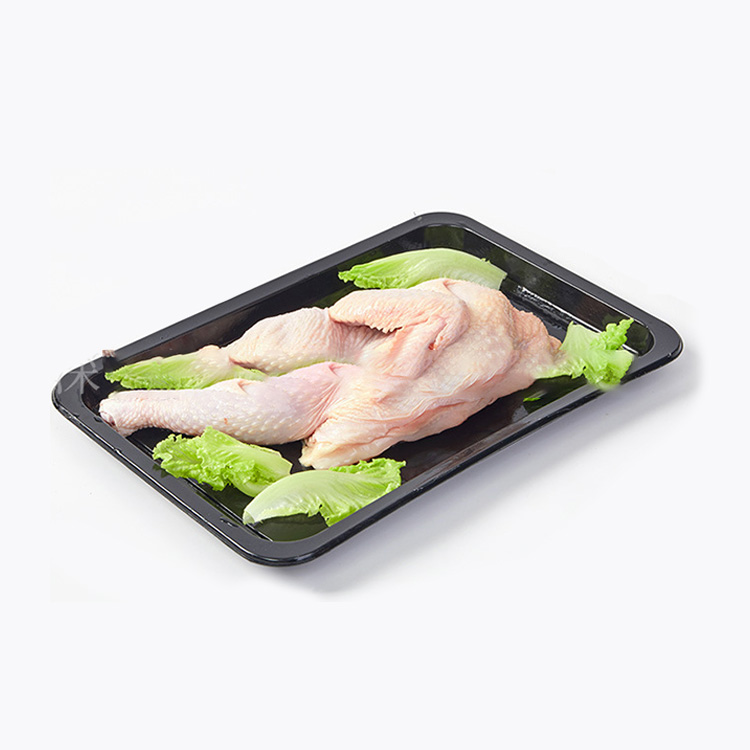
Guiding high-volume food production requires precise material selection to protect bottom-line profits. As a leading manufacturer with over 15 years of expertise, HUISU QINYE Plastic Group helps procurement directors and packaging engineers avoid the immediate operational risks of incompatible polymers. Suboptimal choices lead to catastrophic tray warping, flange seal failures, rapid protein oxidation, and costly retailer rejections.
Core Material Recommendation:
Select PET for chilled, raw fresh meat requiring maximum optical clarity and superior gas barriers in Modified Atmosphere Packaging (MAP).
Select PP for hot-fill processing, microwave heating, and temperature extremes spanning -20°C to +120°C.
Executing a successful packaging strategy requires matching resin performance to exact thermal and atmospheric demands. Choosing the correct material directly protects margins, safeguards product integrity, and prevents brand damage across cold supply chains.
Key Takeaways
Pick PET trays for cold raw meat because high visual clarity and strong gas barriers keep meat fresh.
Pick PP trays for hot foods and microwave reheating because they withstand extreme temperatures from -20°C to +120°C.
Bad packaging choices cause tray warping, seal leaks, and fast food spoilage that hurt your business profits.
PET material features low oxygen transmission rates that stop raw red meat from turning brown in display cases.
PP material offers great grease resistance and high flexibility, making it perfect for fatty meats and hot-fill processing.
Lighter PP material yields more trays per ton, which helps lower overall shipping fees and warehousing costs.
Financial Risks of Incorrect Food Packaging Selection
Direct Profit Loss from Spoilage and Discoloration
Selecting an incompatible polymer causes immediate financial loss in meat processing operations. Suboptimal choices alter interior tray environments, which directly shortens fresh product shelf life. Using substandard packaging allows atmospheric gas exchange to ruin protein quality prematurely. See how we helped a major supermarket chain combat this by extending shelf-life and drastically reducing retail waste with precision PP trays.
Gas Permeability Impact on Fresh Protein
Barrier failure alters protective gas balances inside sealed containers. Oxygen entering the package converts natural red myoglobin into unappealing brown metmyoglobin. Proper gas containment stabilizes color integrity and delays biological spoilage in chilled distributions.
Oxidation Rates in Chilled Retail Displays
Accelerated oxidation in refrigerated display cases forces retail stores to discount meat products quickly. Discoloration triggers immediate gross margin degradation across retail networks:
Impact Category | Regional / Operational Details | Financial & Margin Effect |
|---|---|---|
National Financial Losses | United States Retailers | Up to $1 billion lost annually in beef sales (~4–5% of wholesale value) |
National Financial Losses | Canadian Retailers | Approximately $200 million lost annually |
Operational Shrink Mechanisms | Trimming & Re-purposing | Trimming oxidized edges and grinding unsold steaks for discounted sale reduce profit margins |
Packaging Line Downtime and Material Waste
Incorrect tray specifications disrupt factory throughput and raise operational scrap rates. Automated production lines require reliable physical dimensions and predictable thermal resistance to run smoothly.
Flange Sealing Failures and Package Leaks
Uneven sealing surfaces prevent heat films from creating tight hermetic bonds. Flange gaps trigger liquid purges and atmosphere leaks during shipping.
Operational Insight: Poor flange construction requires workers to stop packing machinery, inspect bad seals manually, and re-pack leaking trays, which significantly raises labor overhead.
Retailer Rejections and Brand Damage
Failed packaging ruins commercial partnerships and weakens supplier trust. Supermarket buyers reject full pallet loads when containers show visible physical defects or internal condensation. High clarity packaging builds immediate consumer trust and increases daily store sales.
PET Trays for Freshness and High Clarity
Superior Optical Clarity for Fresh Meat
Polyethylene Terephthalate (PET) offers unmatched optical properties for high-end retail displays. Food processors select PET trays when product appearance directly drives purchasing decisions at the store level.
Gas Barrier Capabilities for MAP Systems
Modified Atmosphere Packaging relies on strict gas composition to prevent biological degradation. PET material features an extremely tight molecular structure, yielding exceptionally low oxygen transmission rates (OTR) compared to alternative resins. Restricting external oxygen keeps red meat vibrant and extends overall shelf life significantly.
PP Meat Tray Solutions for Thermal Endurance
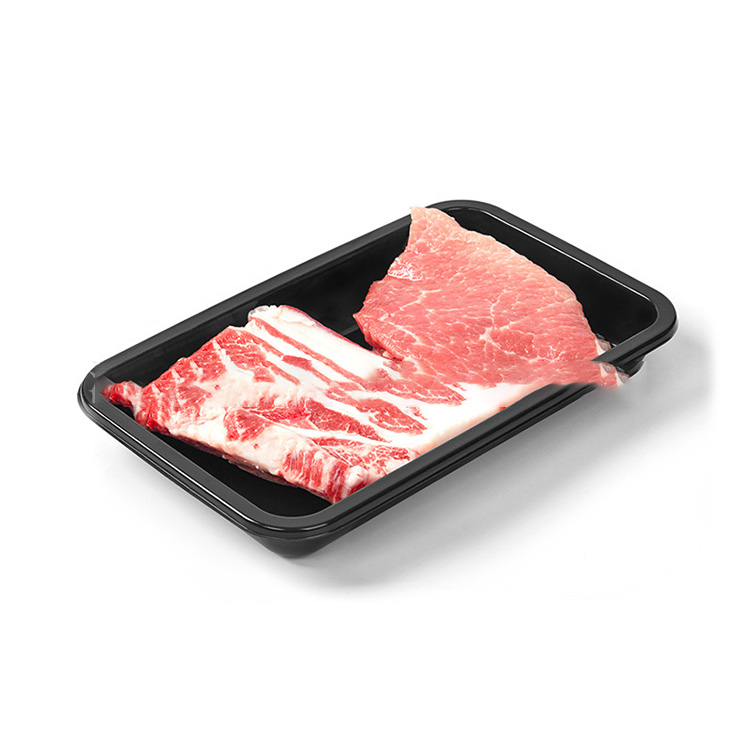
Industrial packaging systems require high thermal resistance for hot-fill processing and direct consumer reheating. Engineered from 100% food-grade, BPA-free high-clarity PP, HSQY Premium trays serve as an industry-standard solution. Choosing high-performance wholesale PP meat trays ensures predictable operational results across high-speed packaging lines.
High Heat Tolerance and Microwavability
Utilizing PP trays allows processing facilities to handle extreme temperature transitions without risking structural container failure. HSQY PP plastic food containers maintain structural integrity across thermal operational ranges from -20°C freezer storage up to +120°C microwave reheating.
Grease Resistance and Visual Merchandising
Heavy lipid concentrations in red meat and poultry can stress vulnerable polymers over time. Utilizing a resilient PP meat tray prevents oil absorption and surface degradation.
Visual Merchandising Tip: Aesthetic color availability is crucial for retail. For example, utilizing premium black PP trays perfectly highlights red meats, while clinical white is ideal for raw poultry, improving visual presentation and perceived hygiene.
Performance Advantages: Hermetic Seals & Vacuum Systems
Precision-engineered, ultra-flat sealing flanges create a 100% leak-proof bond. HSQY PP trays support Modified Atmosphere Packaging (MAP) and custom vacuum packaging systems for pork, lamb, and poultry seamlessly. Secure hermetic seals retain internal gas mixtures and completely eliminate liquid leaks during distribution.
Comprehensive PP vs PET: Technical, Thermal & Economic Comparison
Enterprise buyers must evaluate the critical differences between resin types to avoid financial losses. Below is a consolidated evaluation of physical properties, manufacturing costs, and supply chain demands.
Property / Metric | Polypropylene (PP) | Polyethylene Terephthalate (PET) |
|---|---|---|
Material Density | ~0.90 g/cm³ (Yields lighter trays, lower freight costs) | ~1.34–1.40 g/cm³ (Heavier, excellent rigidity) |
Melting / Heat Limit | Melting point: 160–170°C; microwave safe | Softens above 60–70°C; deforms under heat |
Freezer / Cold Limit | Flexible down to -20°C | Maintains structural integrity down to -10°C |
Oxygen Barrier (OTR) | Moderate (Requires specific MAP films) | Very Low (Excellent for raw red meat) |
Recyclability Code | #5 PP (Widely expanding in municipal streams) | #1 PET (Highly recycled globally) |
The CPET Alternative for Dual-Oven Applications
While standard PET fails under high heat, CPET (Crystallized PET) offers a premium alternative for ready-to-eat meat meals. Capable of withstanding oven temperatures up to 220°C (428°F), CPET bridges the gap between PET's superior barrier properties and the thermal endurance required for consumer reheating. Explore our complete range of specialized food packaging solutions for premium airline catering and retail ready-meals.
Logistics, Display, and Packaging Lines: The One-Stop Advantage
Modern supply chains demand strict container integrity from factory floors to dinner tables. Heat-sealing performance relies heavily on matching lidding films to tray substrates. Plant operators must configure line temperatures based on container material composition.
The HUISU QINYE Ecosystem: Flange sealing failures often occur when trays and films are sourced from different vendors with mismatched melting points. By leveraging a one-stop packaging ecosystem, you can source perfectly calibrated trays, compatible sealing films, and automated thermoforming & sealing machinery from a single manufacturer. This guarantees material compatibility, maximizes throughput yield, and eliminates line downtime.
FAQ
Can PP meat trays handle both freezing and microwave heating?
Yes, polypropylene trays handle extreme temperature changes smoothly. They maintain structural integrity from -20°C freezer storage up to +120°C microwave heating, making them ideal for frozen and ready-to-heat meal lines.
Why are PET trays preferred for raw red meat presentation?
PET offers glass-like optical clarity and anti-fog performance. Furthermore, PET features extremely low oxygen transmission rates, keeping raw red meat vibrant and fresh for longer display periods.
Are HSQY PP meat trays compliant with food safety regulations?
Yes. They comply fully with strict global food safety standards, including FDA and EU 10/2011 regulations, ensuring complete chemical non-reactivity during direct food contact.
How does tray selection impact packaging line costs?
Choosing the correct material reduces production scrap rates. Low-density PP yields more trays per ton, lowering individual unit costs. Meanwhile, precise flange dimensions prevent seal failures, reducing downtime on high-speed MAP packaging lines.