



 Plastic Sheet


 Food Containers


 Sealing Film


 Food Packing Machinery
  One-Stop Solutions

Choosing the Best PET Fruit Container for Safe and Fresh Storage
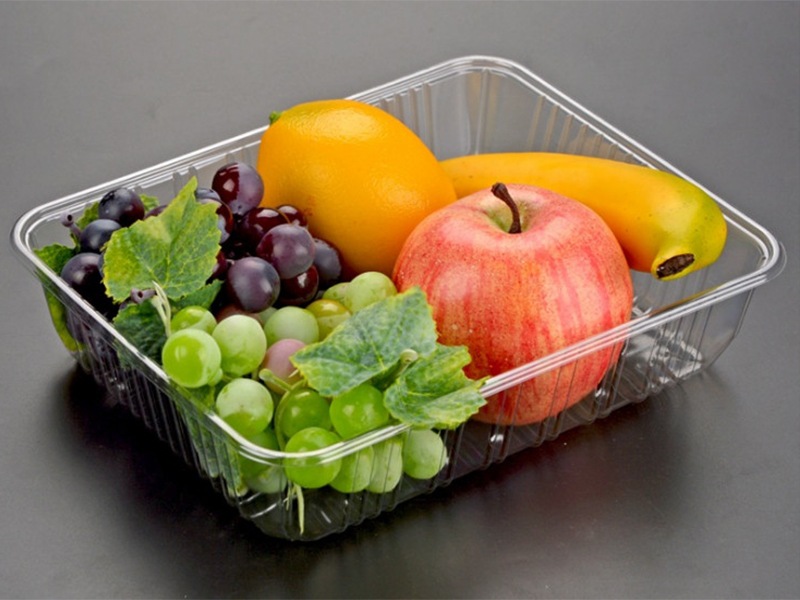
For farm cooperatives, food distributors, and retail chains, extending the shelf life of fresh produce while maximizing visual appeal is a constant challenge. The packaging you choose directly impacts your bottom line, influencing everything from cold-chain logistics to impulse purchases at the grocery store. Today, PET (Polyethylene Terephthalate) has emerged as the undisputed leader in fresh fruit and vegetable packaging. But why do industry leaders prefer PET over other plastics like PP or CPET? And how do design features like ventilation holes actually preserve your produce? Let's explore the science of thermoformed produce packaging.
Feature | PET | PP | CPET |
|---|---|---|---|
Visual Clarity | Crystal Clear | Hazy / Translucent | Opaque |
Temp Tolerance | Cold & Room Temp | High Heat (Microwave) | Extreme (-40°C to 220°C) |
Best Application | Fresh Produce, Salads | Hot Takeout, Ready Meals | Airline Meals, Oven-ready |
Cost-Effectiveness | Highly Cost-Effective | Moderate | Higher (Specialty) |
With PET, you get unmatched clarity for retail merchandising, excellent cold-chain stability, and the most cost-effective solution for high-volume agricultural packaging.
Key Takeaways for B2B Buyers
Choose PET fruit containers for their crystal-clear transparency, which drives impulse purchases and builds consumer trust.
Look for precision ventilation holes that allow produce to respire, preventing condensation, mold, and premature spoilage.
Select stackable clamshell containers to optimize vertical space and prevent crushing during cold-chain logistics.
Consider transitioning to rPET (Recycled PET) to meet corporate ESG goals and growing consumer demand for sustainable packaging.
Why PET Dominates Fresh Produce Packaging
Benefits of PET for Food Retail
When packaging highly perishable items like berries, grapes, and cut fruits, the material must balance protection, preservation, and presentation. PET offers a unique combination of properties that make it ideal for modern food retail and supply chains.
Here is why food distributors and supermarkets consistently specify PET for their food container packaging:
Feature | Description |
|---|---|
Clarity | PET offers glass-like transparency, making it a top choice for showcasing premium produce and driving retail sales. |
Breathability | Engineered with ventilation holes to control moisture and gases, allowing produce to respire and extending shelf life. |
Strength-to-Weight | Lightweight yet highly rigid, providing excellent protection for delicate fruits during stacking, palletization, and transit. |
Cold Stability | Withstands freezing and refrigerated display temperatures without becoming brittle or cracking. |
Cost-Effectiveness | More affordable than CPET or glass, making it ideal for high-volume agricultural and commercial packaging operations. |
You get a packaging solution that is easy to handle, reduces food waste, and looks premium on any supermarket shelf.
The Science of Ventilation: Why Holes Matter
Fresh fruits and vegetables continue to "breathe" (respire) long after they are harvested, releasing moisture and gases like carbon dioxide. If trapped inside a sealed container, this condensation accelerates mold growth and spoilage.
High-quality PET clamshell containers are engineered with precision ventilation holes. These holes facilitate essential airflow, allowing excess moisture and gases to escape while maintaining the optimal humidity level inside the pack. Polypropylene (PP) works well for hot foods, but its hazy transparency and lack of specialized breathability designs make it less ideal for premium fresh produce displays.
Tip: For high-value, delicate fruits like raspberries and cherry tomatoes, always specify PET containers with optimized hole patterns to maximize shelf life and retail appeal.
Key Design Features for Supply Chain Efficiency
Material Quality and Food Safety
When sourcing packaging, material quality and compliance are non-negotiable. The best thermoformed containers use food-grade materials that protect your produce and your brand reputation. Backed by over 20 years of industry experience, HSQY provides certified food-grade PET and PP sheets that are BPA-free, FDA-compliant, and safe for direct food contact.
Sourcing Factor | Description |
|---|---|
Material Grade | Must be certified food-safe, non-toxic, and odorless for fresh produce applications. |
Thermoformability | Sheet rolls must offer excellent dimensional stability for deep-draw vacuum forming without stress whitening. |
Stackability | Interlocking ridges and reinforced corners maximize vertical storage capacity in warehouses and refrigerated trucks. |
Customization | Options for embossed logos, custom mold designs, and specific sheet thicknesses (e.g., 0.18mm to 0.8mm). |
Clamshell & Hinged-Lid Efficiency
For high-speed packing lines, one-piece hinged-lid clamshells are the industry standard. They eliminate the need for separate lids, speed up the packing process, and feature secure snap-closures that prevent accidental spills during transit while allowing consumers to easily reseal the pack at home.
Types of Thermoformed Food Containers
You have plenty of choices when it comes to thermoformed food containers. Each type offers unique benefits for different stages of the supply chain. Let’s break down the most popular options.
Clamshell PET Containers
Clamshell containers are a favorite for berry and grape packaging. They provide 360-degree product visibility and structural rigidity.
Product Type | Best For | Main Advantage |
|---|---|---|
PET Clamshells | Berries, Cherry Tomatoes, Grapes | High clarity, secure snap-closure, crush-resistant |
PP Deli Containers | Hot Soups, Ready Meals, Sauces | Microwave-safe, leak-resistant, high heat tolerance |
CPET Trays | Airline Meals, Oven-Ready Dinners | Freezer-to-Oven (-40°C to 220°C), metal-detector friendly |
Compartmentalized PET Trays
If you are packaging mixed fruit salads or premium snack packs, compartmentalized containers are a smart pick. They keep different products separated, preventing flavor transfer and physical damage caused by fruits rubbing against one another.
Sourcing the Right Packaging for Your Business
Matching Material to Application
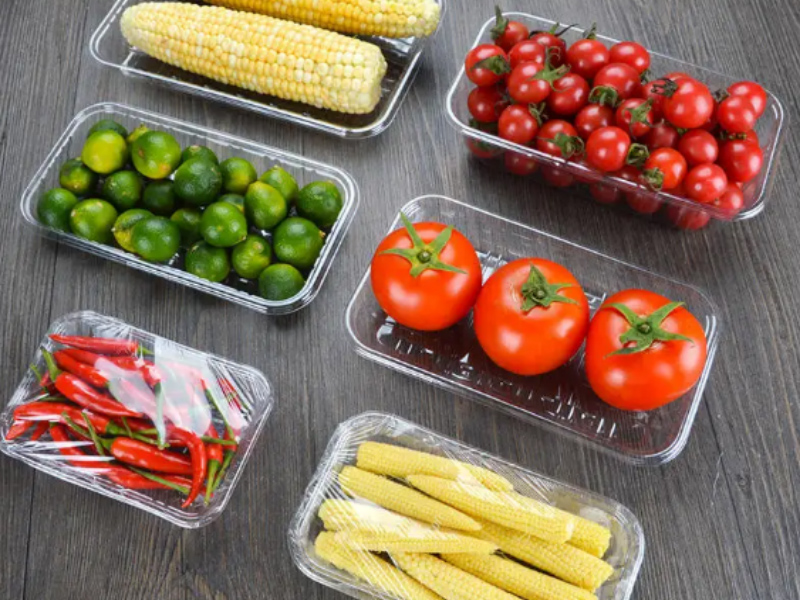
Different products require different material properties. If you store cold berries, you want PET with good ventilation. If you are packaging hot takeout meals, you need microwave-safe PP. For airline catering that requires oven heating, CPET is the only viable option. When you match the material to the application, you reduce waste and ensure food safety.
Tip: Always consult with your packaging supplier regarding sheet thickness and mold design before scaling up production.
The Shift to rPET & Sustainable Sourcing
With global ESG goals and consumer demand for eco-friendly packaging at an all-time high, sustainability is no longer optional. Forward-thinking brands are now transitioning to rPET (Recycled PET) containers. By utilizing post-consumer recycled PET sheet materials, businesses can significantly reduce their reliance on virgin plastics and lower their carbon footprint.
Sustainability Benefit | Description |
|---|---|
Reduced Virgin Plastic | Lowers environmental footprint by minimizing new plastic production. |
Infinite Recyclability | PET can be recycled repeatedly without significant quality loss, supporting a circular economy. |
Brand ESG Alignment | Helps brands meet strict corporate sustainability targets and appeal to eco-conscious retailers. |
Quality Control & Thermoforming Considerations
Controlling Sheet Thickness
To ensure your containers are durable yet cost-effective, controlling the thickness of your PET sheet rolls is critical. Sheets that are too thin may warp or crack during the vacuum forming process or transit. Sheets that are too thick waste material and increase your per-unit cost. By leveraging our one-stop packaging ecosystem, you get scientifically formulated plastic sheets perfectly matched to thermoforming machines, ensuring consistent performance and minimizing production waste.
Mold Design and Precision
The quality of the final container relies heavily on the CNC-machined mold. Precision molds ensure that ventilation holes are cleanly punched without leaving sharp burrs, and that stacking lugs align perfectly for automated palletizing.
Note: Always request 3D mold drawings and prototype samples before committing to mass production runs.
Sourcing high-quality produce packaging requires a reliable partner who understands both the raw materials and the final application. Here’s a quick checklist to help you evaluate your packaging supply chain:
Key Consideration | What to Look For |
|---|---|
Material Quality | Certified food-grade PET, PP, or rPET with FDA compliance. |
Design & Engineering | Stackable geometry, precision ventilation, and secure snap-closures. |
Manufacturing Power | Supplier capability to provide both raw sheet rolls and finished thermoformed containers. |
Customization | Options for embossed branding, custom mold sizing, and sealing film compatibility. |
Ready to Upgrade Your Food Packaging Supply Chain?
Whether you need high-clarity PET sheets for your own thermoforming lines, or wholesale finished PET fruit containers for your agricultural brand, HUISU QINYE (HSQY) is your trusted manufacturing partner.
Get a Quote Today:
→Request a Consultation & Sample
→ Email our sales team directly: sale6@hgqyplastic.com
FAQ
How do I know if a PET container is made from food-safe materials?
Always request compliance certificates from your supplier. Look for documentation that mentions certified food-safe materials, FDA compliance, and BPA-free certifications. HSQY provides full traceability and compliance documentation for all our food-grade sheet rolls and containers.
Can PET containers be used in the microwave?
Standard PET is designed for cold and room-temperature applications (like refrigerated fruit displays) and should NOT be microwaved. For microwave-safe or hot-fill packaging, you must use PP (Polypropylene) or CPET trays.
Why do PET fruit containers have holes in them?
The holes provide essential ventilation. Fresh produce respires and releases moisture and CO2. Ventilation holes prevent condensation buildup, which is the primary cause of mold and premature spoilage in berries and leafy greens.
What is the difference between PET and rPET?
PET is made from virgin raw materials, while rPET is manufactured using post-consumer recycled plastics. Both offer the same food-safe clarity and durability, but rPET significantly reduces environmental impact and supports corporate sustainability goals.
Does HSQY supply both the raw material and the finished containers?
Yes. HSQY operates a comprehensive one-stop ecosystem. We supply food-grade PET/PP rigid sheet rolls for thermoformers, as well as wholesale finished containers, CPET trays, and sealing films for food distributors and brands.
Stay Connected with HSQY
Recommended Products
-

Good Rigid PP Sheet with Anti-Fog Coating – 0.5mm / 0.7mm For Fresh Fruit and Salad Containers
-

HSQY 0.25mm Clear Rigid PET Sheet Roll For Food Fruit Blister Packaging
-

Disposable Clear PET Rectangle Take Away Food Fruit Salad Container With Lids
-

Clear Disposable PET Fruit Salad Food Container
-

Customizable Clear Food-Grade PET Fruit Box with Lid
-

Plastic Ventilated PET Fruit Clamshell Container for Fresh Berries Blueberries Strawberries
-

High-Strength Clear PET Fruit Tray for Supermarket